London School of Economics and Political Science
Revisionist Philosophy: Mr Truman’s Degree
In this week’s story, we’ll explore the surprising connections which link contemporary social protest, to Oxford University’s decision to award Harry Truman an honorary degree (despite dropping the bomb), via the work of the philosopher G. E. M. Anscombe.

Learning Objectives
At the end of this lecture, you should be able to:
- Reconstruct Anscombe’s ethical objection to Sidgwick’s theory of intentional action.
- Explain Anscombe’s theory of intention, and show how it resolves the problem she identified.
- Know the difference between reasons for acting, a rationalisation of an action, and a rational action.
- Show how contemporary culture has, in some areas, (mistakenly?) re-embraced Sidgwick’s theory.
Outline
- Behaviours and actions
- Anscombe’s critique of philosophical psychology
- Intention, action, and reason
- Application: understanding social protest in modern society
Behaviour and Action, I
In ordinary language, we distinguish between a person’s behaviour and their action. What does this distinction amount to?
In the Philosophical Investigations, Wittgenstein put this question as follows:
Let us not forget this: when ‘I raise my arm’, my arm goes up. And the problem arises: what is left over if I subtract the fact that my arm goes up from the fact that I raise my arm? \citep{Wittgenstein:1958}
Question: What does it mean to subtract facts?
Behaviour and Action, II
As a first attempt to identify the difference, let us try the following:
- A behaviour is purely physical. We normally think of behaviour as involving motion (e.g., “my arm goes up”) but behaviour does not necessarily require motion (e.g., “playing possum”).
- An action involves both behaviour and the appropriately associated mental state.
Question: What is the “appropriately associated mental state”?
This is the question to which we now turn.
Sidgwick’s The Methods of Ethics
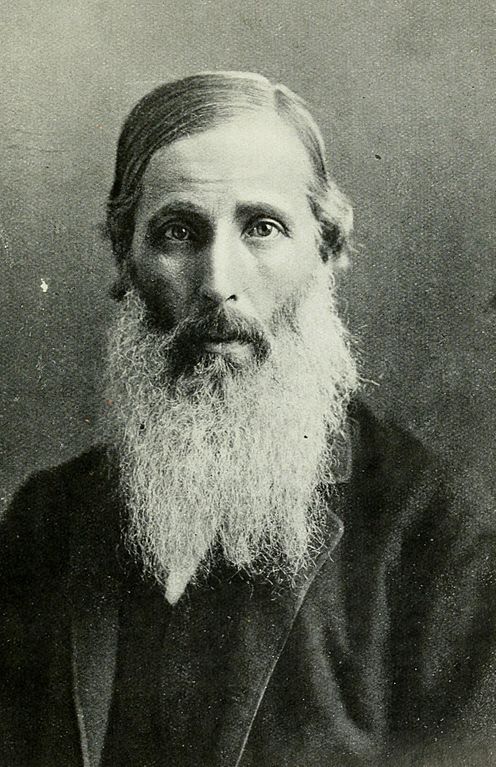
Henry Sidgwick (1838–1900) was an English philosopher, economist and educator. He helped found Newnham College, the first women’s college at the University of Cambridge.
Most known for The Method of Ethics, which provides what is generally recognised as the best statement of classical utilitarianism.
It is his proposed solution to the characterisation of action which concerns us.
Sidgwick’s theory of intention: why it matters
[I]n the case of conscious actions, the agent is not regarded as morally culpable, except in an indirect way, for entirely unforeseen effects of his voluntary actions. \citep[pg. 60]{Sidgwick:1907}
Thus the proper immediate objects of moral approval or disapproval would seem to be always the results of a [person]’s volitions so far as they were intended. \citep[pg. 60]{Sidgwick:1907}
Sidgwick’s theory of intention
In the seventh edition of The Method of Ethics, Sidgwick defines ‘intention’ as follows:
I think, however, that for purposes of exact moral or jural discussion, it is best to include under the term ‘intention’ all the consequences of an act that are foreseen as certain or probable; since it will be admitted that we cannot evade responsibility for any foreseen bad consequences of our acts by the plea that we felt no desire for them, either for their own sake or as means to ulterior ends: such undesired accompaniments of the desired results of our volitions are clearly chosen or willed by us. \citep[pg. 202]{Sidgwick:1907}
Sidgwick’s theory of intention
As a further intuition pump, Sidgwick gives the following illustration:
Suppose a nihilist blows up a railway train containing an emperor and other persons: it will no doubt be held correct to say simply that his intention was to kill the emperor; but it would be thought absurd to say that he ‘did not intend’ to kill the other persons, though he may have had no desire to kill them and may have regarded their death as a lamentable incident in the execution of his revolutionary plans. \citep[pg. 202, footnote 1]{Sidgwick:1907}
“Mr. Truman’s Degree”
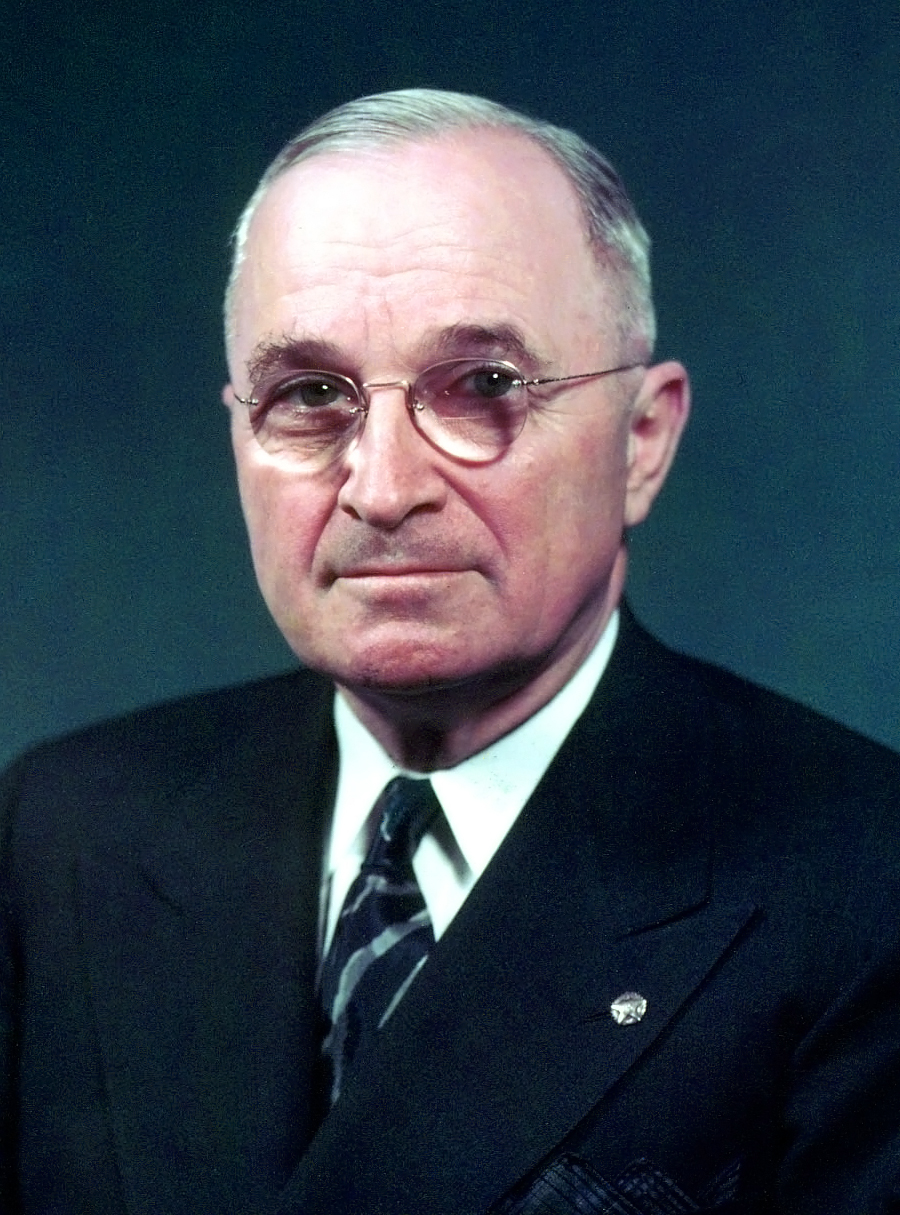
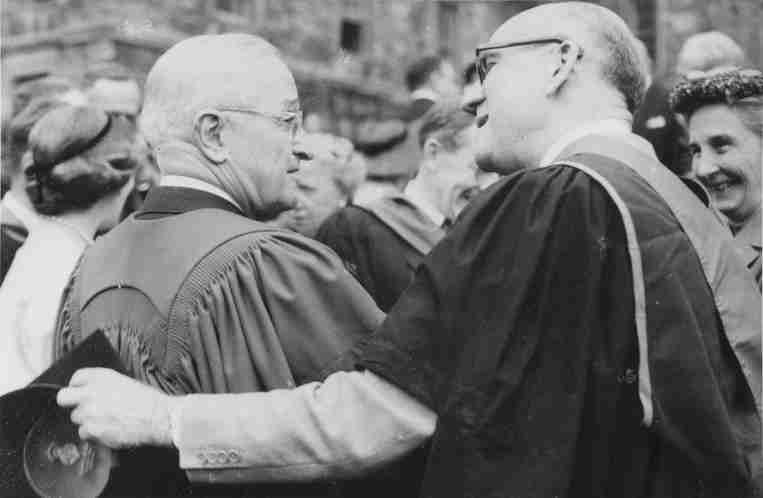
In 1956, G. E. M. (Elizabeth) Anscombe led a controversial protest against Oxford University’s decision to award Harry S. Truman an honorary doctorate of civil law. Why?
“Mr. Truman’s Degree”
Anscombe thought that Truman’s decision to drop the atomic bomb on Hiroshima and Nagasaki made Truman a murderer.
For men to choose to kill the innocent as a means to their ends is always murder and murder is one of the worst of human actions. \citep{Anscombe:1956}
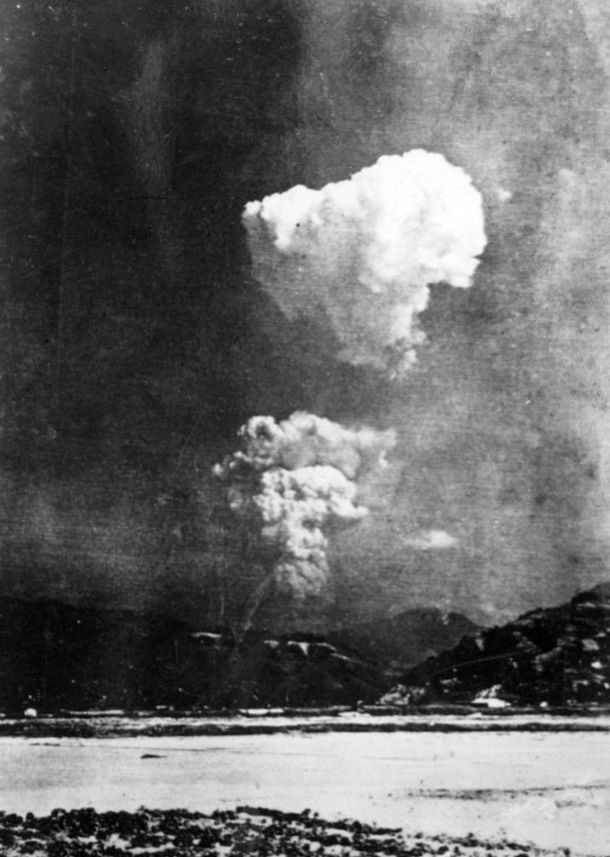
The atomic blast at Hiroshima, 2-5 minutes after detonation.
“Mr. Truman’s Degree”
In part, Anscombe thought that there was “a great deal of self-serving flattery among those who stood in defense of honoring Truman” \citep{Schwenkler:2019}.
In addition, Anscombe thought that this defence was possible because of underlying philosophical mistakes in how people understood action — letting Truman off the hook.
In particular: Sidgwick’s theory of intention.
The atomic blast at Hiroshima, 2-5 minutes after detonation.
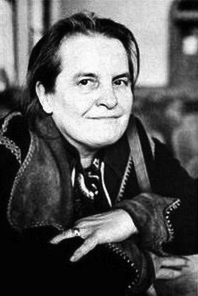
G. E. M. (Elizabeth) Anscombe
Anscombe’s philosophical skills were formidable, and she was supremely well-suited to develop this critique.
- In 1942, Anscombe attended Newnham College, Cambridge, where she was a student of Wittgenstein.
- Held a research fellowship at Somerville College, Oxford (1945–1970).
- Appointed by Wittgenstein to translate his Philosophical Investigations and to be a literary executor, after his death.
- Elected Professor of Philosophy at the University of Cambridge in 1970.
G. E. M. (Elizabeth) Anscombe
Here are some of Anscombe’s contributions to contemporary philosophy:
- Invented the term “consequentialism” in her paper “Modern Moral Philosophy”.
- Often credited with founding contemporary virtue ethics (see above paper).
- Her book Intention was described by Donald Davidson as “the most important treatment of action since Aristotle”. \nocite{Anscombe:1963}
Where Sidgwick went wrong
Recall:
[Sidgwick] defines intention in such a way that one must be said to intend any foreseen consequences of one’s voluntary action […] it does not make any difference to a man’s responsibility for something that he foresaw, that he felt no desire for it, either as an end or as a means to an end. \citep{Anscombe:1958}
Sidgwick’s conception of intention
Anscombe’s critique
The problem, for Anscombe, is that Sidgwick’s definition of intention draws the distinction between legitimate and illegitimate objects of attack, during war, in the wrong place.
Anscombe wants to say that innocent civilians cannot be targetted by the military waging a war. But:
[T]he concept of “innocence” at work in these distinctions does not have to do with a person’s moral character: the point of the restrictions is not that armies should attack bad people rather than good ones, but rather that they may attack only those people who are actively involved in the military conflict. \citep{Schwenkler:2019}
Anscombe’s critique
Who are the innocents?
Typical answer: (a) People who are not fighting, and (b) people who are not supplying those who are fighting with the means of fighting.
Under Sidgwick’s definition of intention, the distinction between innocents and non-innocents gets drawn in the wrong place. E.g.,
- A farmer who grows crops, foreseeing that they will be sold to a distributor, who will then sell them to the army.
- A civilian who makes cotton thread, foreseeing that some of the thread will likely end up in military uniforms.
Anscombe’s critique
In other words, the foreseeability criterion is so permissive that the only people who won’t satisfy it are:
- Young children
- The extremely ignorant
Was Truman a mass murderer? According to Sidgwick’s concept of intention, most of the dead were classified as legitimate targets, not innocents. So, no.
Anscombe thought this was mistaken.
Anscombe’s solution
Sidgwick’s conception of intention
Anscombe’s conception of intention
It’s worth noting that Anscombe’s distinction has historical precursors going back to Thomas Aquinas’s writings in Summa Theologica (13th century).
Anscombe’s solution
By decoupling foreseeable consequences from intended consequences, Anscombe gave us the conceptual resources to criticise Truman’s decision.
Many of those killed were innocent because they did not intend to help the war effort, even though their actions had the foreseeable consequence of doing so.
“Acting under a description”
Recall that, in week 2, we covered how we understand our own experiences through interpretation.
According to Anscombe, when we act we do so under a description of how we understand what we are doing.
I flip the switch, turn on the light, and illuminate the room. Unbeknownst to me I also alert a prowler to the fact that I am home. Here I do not do four things, but only one, of which four descriptions have been given. \citep{Davidson:1963}
Intention, action, and reason
In “Action, Reasons and Causes”, Davidson observes the following relationship:
$A$ does $X$ intentionally if and only if $A$ does $X$ for a reason.
What does it mean to say that $A$ does $X$ for a reason?
Rationalisations of an action
A rationalisation of an action is an explanation of the action which cites the agent’s reason for doing what that agent did.
When an agent does something for a reason, this means, for Davidson, that:
- The agent held a pro-attitude towards actions of a particular kind.
- The agent believed [other mental states might do as well] that their action was of that particular kind.
A reason is a pair $(p,b)$ consisting of a pro-attitude $p$ and a belief $b$.
Descriptions and (primary) reasons
For Davidson, a primary reason is the (a?) reason which caused an agent to perform an action. We can see the role played by descriptions in the following quote:
$R$ is a primary reason why an agent performed the action $A$ under the description $d$ only if $R$ consists of a pro-attitude of the agent toward actions with a certain property, and a belief of the agent that $A$, under the description $d$, has that property. \citep[pg. 687]{Davidson:1963}
Reasons, rationalisations, and rationality
At the end of the day, the picture we arrive at is this:
- The descriptions contained within a reason determine the action an agent did intentionally.
- Two different descriptions may pick out the same event, with only one description identifying the action done by an agent.
- A reason provides a rationalisation of an action.
- Not all rationalised actions (a descriptive notion) are rational (an evaluative notion).
Social protest and Joshua’s question
Recall Joshua’s question, from week 1: “Art thou for us, or for our adversaries?”
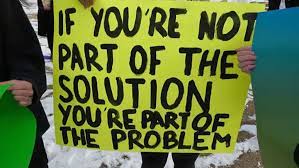
- Anscombe’s theory of intention, and of how we understand action under a description, highlights some of the challenges in attributing intentions to others.
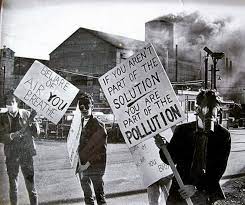
- Not participating could be either a behaviour or an action.
- If it is an action, there are many different, behaviourally equivalent descriptions, available to characterise it.